Long Rides
The Passage (Justin Cronin Edition)The Long Rides are the journeys Peter Jaxon’s father made beyond the Colony in search of survivors, but their meaning exceeds their practical goal. They led to weapons hidden at Twentynine Palms, divided the Household, and shaped the brothers’ competing ideas about what remained beyond the walls. Peter ultimately understands them as an attempt to remember the vanished world, while Theo, who once rejected them, comes to respect the faith that sends Peter onward.
Origins and Material Legacy
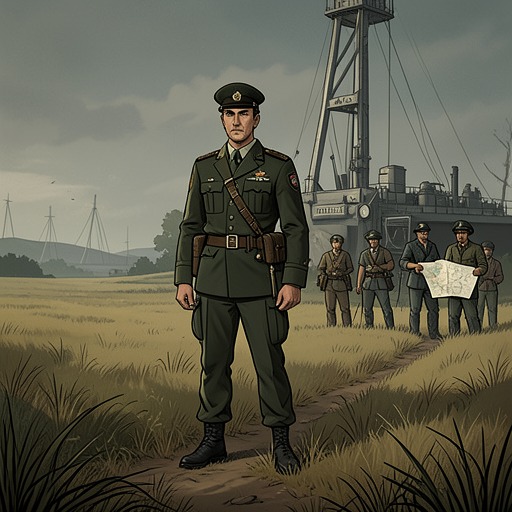
The journeys took Peter’s father and other riders far beyond the Colony. One destination was an old Marine Corps base at Twentynine Palms, roughly two days’ ride away. Most of the site had disappeared beneath the sand; its stores were concealed in an underground bunker, where the father found boxed weapons and vehicles. The weapons included rifles, pistols, mortars, machine guns, and grenades. The vehicles, including tanks, could not be made to run, and the riders had no way to move the heavier weapons.
Instead, Peter’s father and his brother Willem transported rifles to the station by cart, making three trips before Willem was killed. The cache therefore stands as a concrete remnant of the journeys: not a functioning arsenal ready to restore the old military, but a hidden store that the riders could recover only piecemeal. The account does not establish that the cache was the sole reason for the rides; it reveals one significant result of their repeated travel.
Household Opposition and Their End
Peter’s father told his wife and a few others about the weapons. Theo believed the Colonel and Old Chou probably knew as well, and said Zander knew because he stored the guns at the station. Sanjay Patal, however, was deliberately left out. Theo explains that Sanjay opposed the rides, particularly after his brother Raj was killed while riding with Peter’s father.
The disagreement had consequences for the Household’s leadership. According to Theo, Sanjay turned the Household against Peter’s father and voted him out as its Head, bringing the rides to an end. Peter’s father then stepped down and began riding alone. Sanjay later confirms that he opposed the expeditions from the start and that Peter’s father continued despite losing many men. He also explains that Peter’s father wanted Theo on the Household because he intended his son to revive the rides. That intention complicates the idea that the journeys were merely a private habit: they were a contested project with a hoped-for successor.
The Army They Might Have Made
The weapons prompt Peter to ask why his father kept them hidden instead of bringing them up the mountain. Theo refuses to claim knowledge of the bunker itself, but understands the larger idea behind the guns. Their father could not accept that the Colony’s people were all that remained. If the rides uncovered other survivors, the weapons could help make an army to fight the infected, whom Alicia calls the smokes.
Theo rejects that hope as pointless. In his view, the old Army had guns, rockets, and helicopters, yet never returned for the Colony; its failure means there is no reason to believe another force could fare better. His certainty contrasts with the father’s willingness to keep searching and preparing. The Long Rides thus carry both a material prospect—the possibility of an armed force—and a dispute about whether the lost world can be recovered or defended at all.
Peter’s Recognition and Theo’s Change
At first, Peter feels the secret as a personal breach: his father had kept the guns from him, and Theo had kept the story too. In the days afterward, while recovering in the barracks with a rifle that had belonged to his father, Peter reconsiders what the journeys meant. He had imagined the world before the catastrophe as severed from the present, with nothing beyond the Colony but a history already lost. Holding the rifle makes that division less absolute. He comes to see his father as trying to remember the world through the Long Rides, and recognizes a similar breadth of purpose in the men who rode with him.
Peter can accept that Theo may have been expected to shoulder the father’s hope for both brothers. What troubles him is Theo’s apparent change: the brother Peter knew seems to have abandoned more than the rides, speaking as if the only task left is to keep the Colony’s lights on for as long as possible. The journeys therefore become part of Peter’s effort to understand not only his father’s legacy but also what has changed in Theo.
Later, Theo explains that he had always thought the rides were crazy and never wanted to become their father. His view begins to shift on the first night at the power station, when Peter goes outside and Theo sees how fully his brother faces the world beyond the Colony. Theo still calls the action dangerous and says he rebuked Peter for risking them, but admits that he felt relieved: he no longer had to pretend to be someone he was not. Seeing Peter and Amy persist in uncertainty, he comes to believe that making sense is not the point and tells Peter he is proud of him.
An Inheritance Without a Map
The Long Rides are not revived as a restored institution in the evidence presented here. Their legacy instead passes into Peter’s decision to move outward with Amy, an undertaking Theo supports even while worrying about the danger. The distinction matters: Peter does not simply repeat his father’s search for an army. The hope carried forward is more open-ended, grounded in faith rather than a promise that a particular group of survivors or a military force will be found.
On the morning of departure, with Theo’s splints finally removed but his walk still marked by a limp, he watches the sunrise with Peter and Michael. He imagines that if they ever return, the farmstead will seem unchanged, apart from everything, as if time does not pass there. Peter answers that perhaps Theo will return. Their exchange gives the outward journey a quiet counterpoint: the Long Rides look toward what may survive beyond the Colony, while the brothers also leave behind a place to which return remains imaginable.